DREAM
Set a card aside, face up. It leaves your hand, your draw pile, your discard, your exhaust — everything — and waits.
An unofficial character mod for Slay the Spire 2
He doesn’t discard a card. He puts it to sleep — and it wakes up cheaper.




Set a card aside, face up. It leaves your hand, your draw pile, your discard, your exhaust — everything — and waits.
Next turn it comes back with Retain, and it costs 1 less for that turn. Your setup turn buys the one after it.
True for the rest of any turn in which a card woke up. A third of the pool reads it and pays you more.
An Unplayable, Ethereal Status. The Nightmare cards hit above rate and leave these behind for you to deal with.
Dreaming a card costs you the turn you are in. Everything the character does is an argument about whether that trade was worth it.
Play Tuck Away. Gain Block, and put the expensive card you can’t afford yet to sleep.
The sleeping card sits outside the deck. Nothing can discard it, exhaust it, or shuffle it away.
The nightlight pays 3 Block. The card wakes with Retain, one Energy cheaper, and you are Lucid.
Spend it now, hold it with Retain, or fill the slot again and keep the light on.

Starting relic
At the start of your turn, if a card is Dreaming, gain 3 Block.
Five milestones · nine cards · six gated relics
When a milestone is reached, the main menu opens a custom midnight-and-brass reveal screen. It follows the official three-item layout, lets you inspect every card or relic, and queues multiple unlocks safely behind other game popups.
The game’s Timeline is hardcoded to its built-in Epoch types. The Dream Journal stores profile-safe milestones through the game’s save system and freezes them into each run, including co-op sync, without patching that brittle table.
Defeat an Act I boss
Candle Jab
Wake-Up Call
Wakeful
Win 15 Elite combats
Underbed Swipe
Shadow Parade
Nightmare Fuel
Win on Ascension 1
Peek Ahead
Two More Minutes
Second Sleep
Defeat an Act II boss
Threadbare Blanket
Brass Alarm
Porcelain Moon
Win 15 Boss combats
Charred Wick
Silver Mobile
Nightmare Jar
If a card is Dreaming at the start of your turn, gain 3 Block.

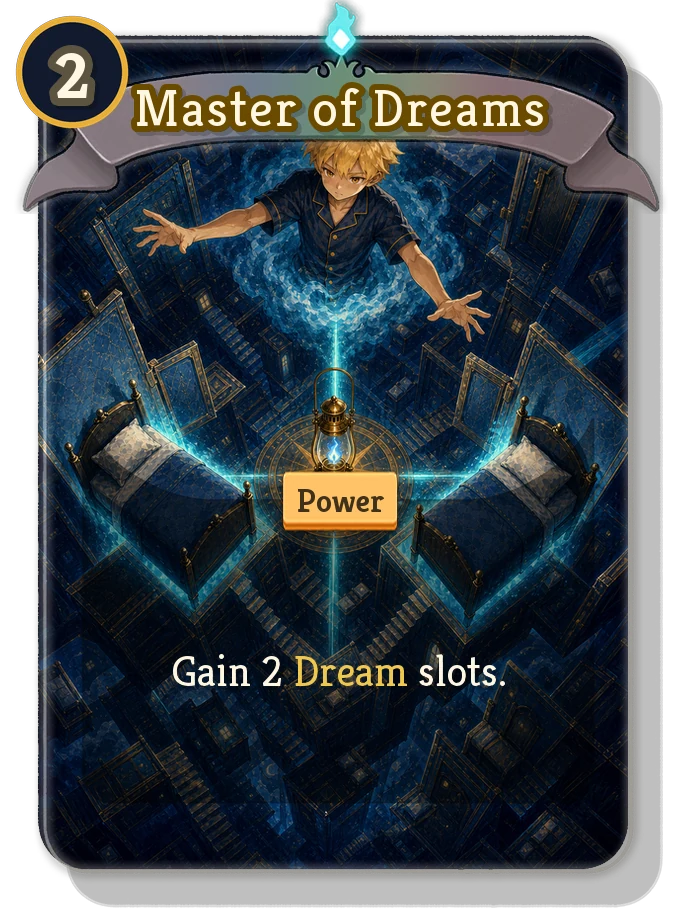
Gain 1 Dream slot.

The first time you Dream a card each turn, gain 2 Block.

Your first Awaken each combat gives 1 Energy and draws 1.

After your opening hand, Dream the top card beyond the slot limit.

Your first exhausted Fright each turn deals 4 to all enemies.

Every third Dream adds 2 cards to your next hand draw.

Your first exhausted Fright each turn gives 1 Energy next turn.
The packages are intentionally porous. A good run takes immediate answers first, then commits to whichever scaling the rewards and relics actually support.
Core: Count Sheep, Stay Up Late, Sleep Cycle, Storybook, Blue Hour, REM Sleep.
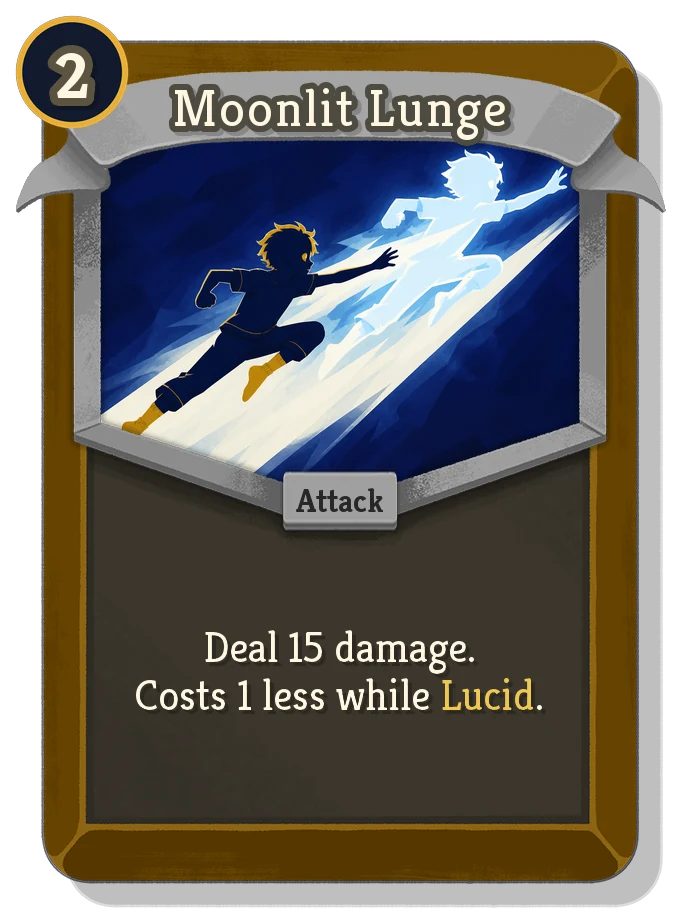
Schedule expensive or situational cards one turn early, trigger Lucid, then chain discounted cards. Strongest when the deck has draw and a few high-impact 2–3 cost cards — not when every pick merely says Dream.
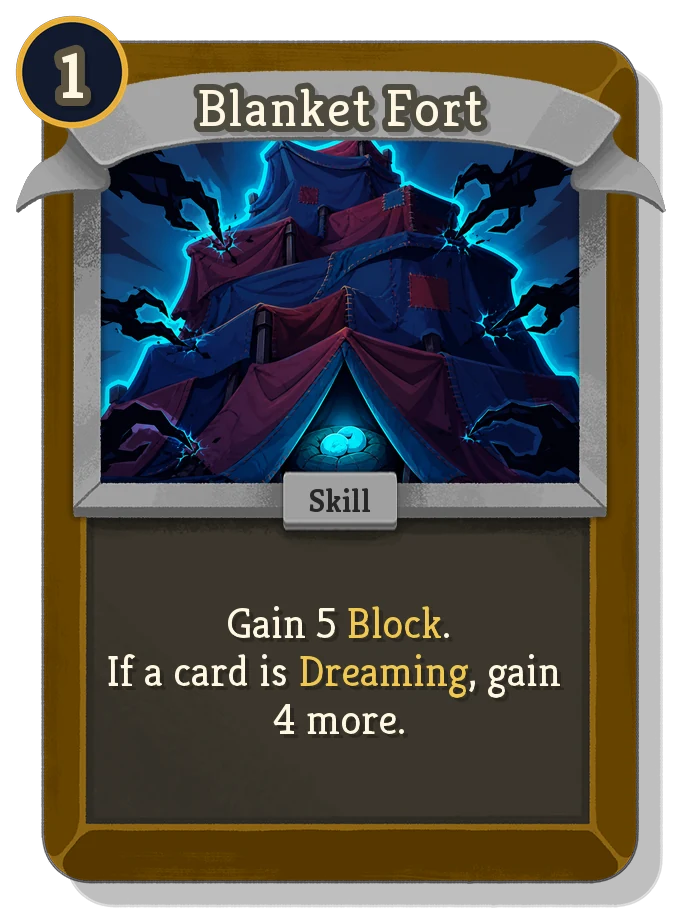
Core: Blanket Fort, Night Watch, Safe Corner, Nightlight Glow, Nightlight Eternal.
Keep at least one slot occupied to collect steady Block and turn setup turns into safety. Two More Minutes is the signature tempo choice: delay a payoff to survive now, and make the later card cheaper.
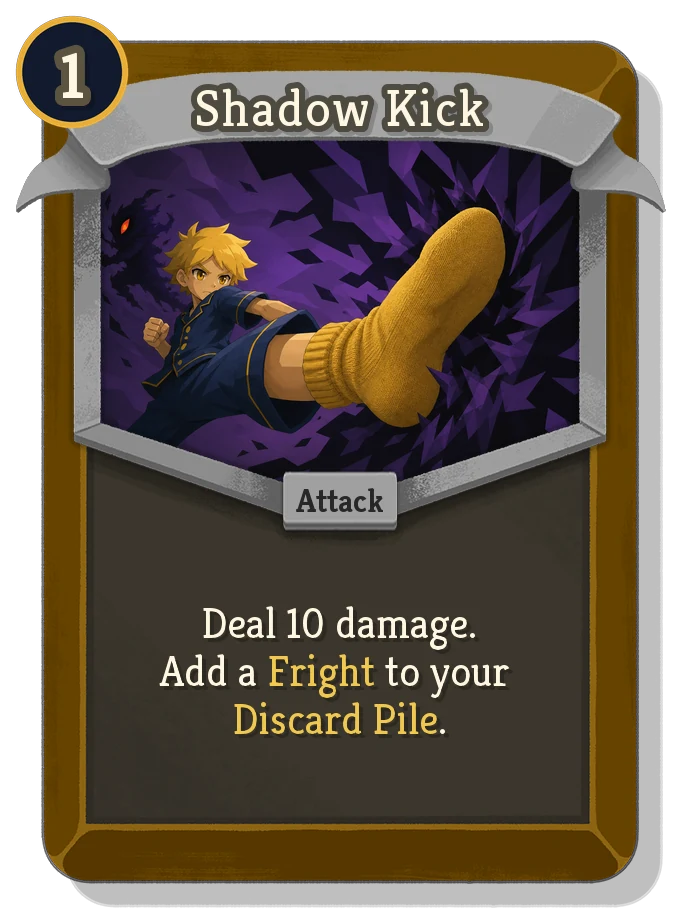
Core: Shadow Kick, Bogeyman’s Claw, Toss and Turn, Stuffed Guardian, Nightmare Fuel.
Take above-rate damage and draw that seed Fright, then draft enough exhaust outlets to stop the deck choking. Early on Fright is a real cost; later, each copy becomes Block, damage or Strength.
| Stage | Take first | Do not overvalue | Deck check |
|---|---|---|---|
| Early Act 1 | Direct damage: Bedside Bonk, Half Awake, Monster Check, Drowsy Swing | Pure slot scaling before the deck can kill an Elite | Can this deck deal 35–50 damage quickly? |
| Late Act 1 | One Fright outlet, one reliable Weak source, and AoE | Multiple Fright generators without cleanup | Can it survive a bad draw while a key card is Dreaming? |
| Act 2 | Scaling Power plus draw or targeted Dream access | More low-impact Commons that dilute Awaken turns | Does the scaling package work with only two pieces? |
| Act 3+ | Redundancy, deck thinning, and a long-fight engine | Slow setup that duplicates an engine already solved | Can it block, scale, and handle Status-heavy fights on its own? |
Everything here is implemented and playable; the numbers are not final. The first five completed Ascension 0 runs now give us a live baseline alongside the official-card comparison.
Five completed runs, 52 fights, 319 turns. The median final floor is 22 and the sample has no win yet. At 6.13 turns per fight—with several 10–19 turn bosses—the early warning is slow closing damage or scaling access, not an overpowered defensive shell.
The Last Nightlight triggered 150 times, worth 8.65 Block per fight. That sits exactly in its intended starter-relic band, so it stays at 3. This pre-fix batch is archived; each installed build now starts a clean telemetry file so later runs are never mixed into it.
Cost reduction plus repeated Awaken can create infinites. Temporary discounts expire when a card leaves the hand, and the “first time each turn” gates on Blue Hour, False Dawn, Storybook and Wakeful are intentional rather than oversights.
Wakeful and Blue Hour now receive their intended Innate upgrade through the same keyword-upgrade path used by official cards. The shared correction also covers Storybook, Waking Dream, and Morning Comes. Dreamer Strike and Defend now carry the engine’s official tags, so tag-based relics such as Large Capsule recognize them.
Dreaming a card is card disadvantage until next turn. If a turn feels passive, the fix is the starter relic or Common damage — not making Dream draw a replacement, which would erase the central tradeoff.
Dream slots carry a lot of state. The HUD shows each slot face up with its countdown and predicted return cost, and illegal Dream actions are refused before you spend Energy. If any of that ever goes quiet, the mechanic stops being readable.
Three minutes, and one dependency. If the character doesn’t appear on the select screen, BaseLib is the usual culprit.
The Dreamer is built on it and will not load without it.
Or drop the TheDreamer folder into the game’s mods/ directory yourself, next to BaseLib.
He sits with the other characters on the select screen, lantern already lit.
Take the discount and chain expensive turns together. Keep a card asleep and let the nightlight pay you Block for it. Or hit above rate and live with the Fright it leaves in your deck. Most runs end up somewhere between two of them.

Also on Nexus Mods